Correctional environments are more than buildings, they are reflections of our values.
Executive Summary
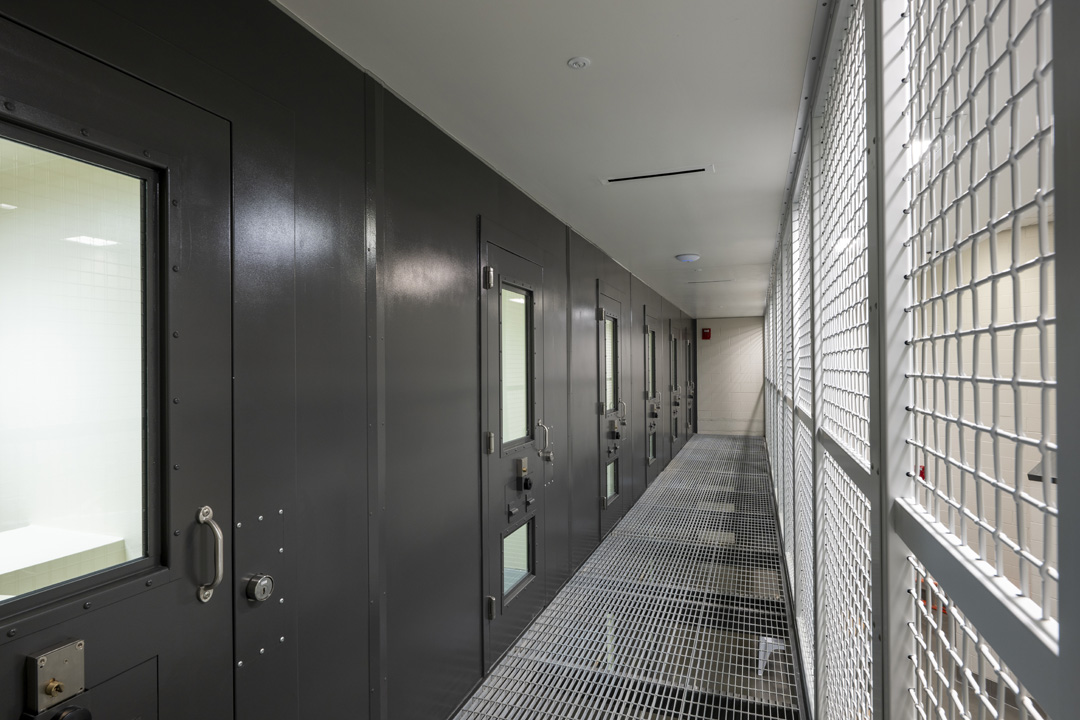
Correctional environments are more than buildings; they are reflections of our values. For decades, facilities prioritized efficiency and control, often at the expense of long-term effectiveness. The results are familiar: high recidivism, staff burnout, poor mental health, and rising public costs.
A shift has occurred. Research and practice now confirm what many in the field have long recognized: the built environment directly shapes behavior, stress, and safety. Design is not neutral. Spaces that are carefully structured to reinforce control, reduce volatility, and support staff safety create stability and more effective operations.
This whitepaper highlights six design strategies reshaping restrictive housing today:
- Safety and accountability as the foundation for secure environments
- Acoustics as a critical factor in behavior regulation and staff wellness
- Biophilic design as a stabilizing tool that reduces volatility
- Color as an active regulator of mood, orientation, and perception
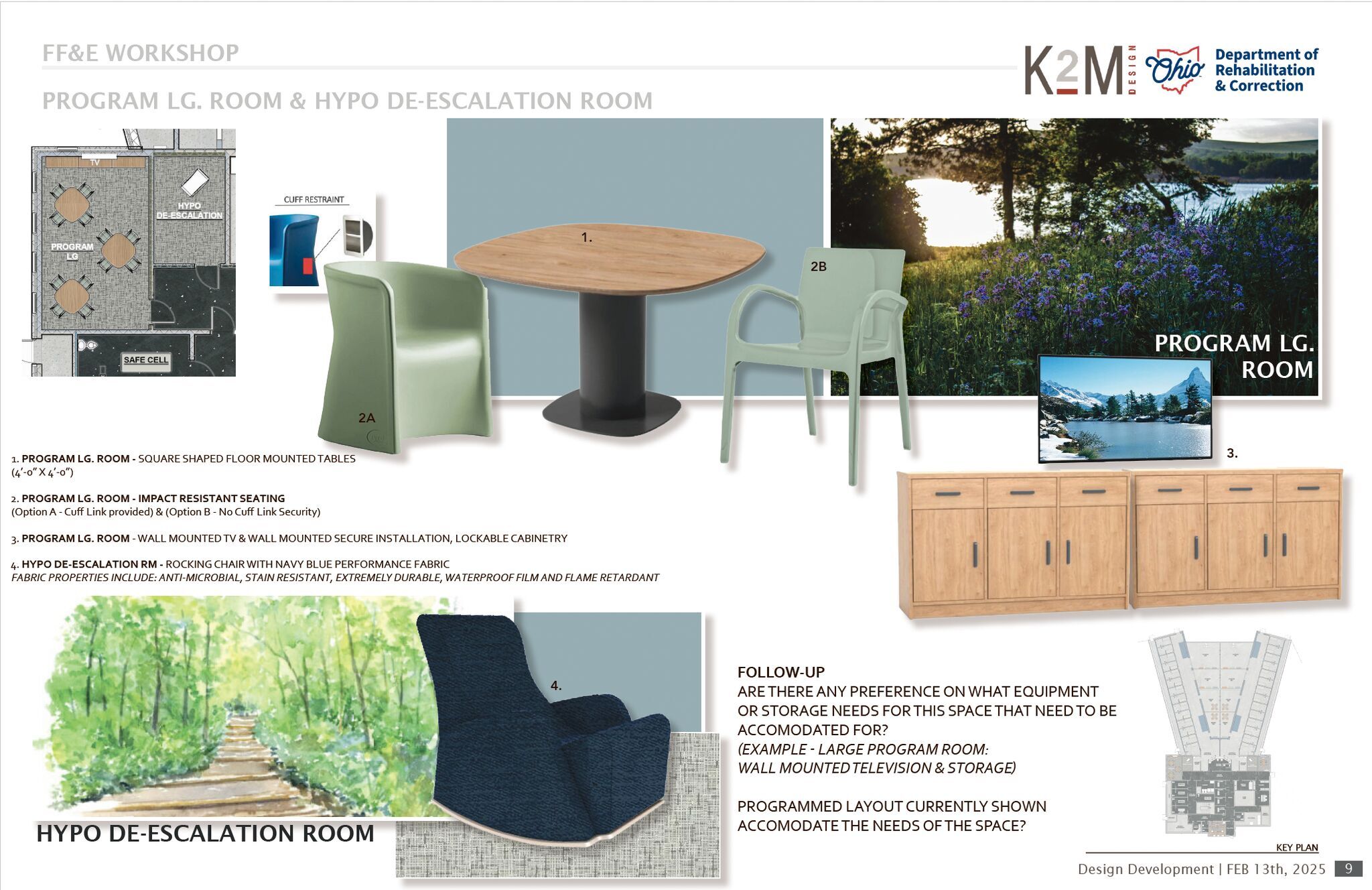
- Hyper- and hypo-de-escalation rooms as spaces for prevention and stabilization
- Structured programming that maintains order and minimizes risk
The path forward requires courage and vision. Leaders must reject the false choice between security and humanity. In practice, the two reinforce each other: secure environments emerge when facilities are designed to minimize escalation, and staff can maintain order most effectively when spaces are intentionally planned for control and stability.
Introduction: The Turning Point
Across the U.S., correctional systems are under strain. Overcrowding, staff shortages, rising operational costs, and persistent violence challenge communities and budgets alike. At the same time, public expectations are shifting. Communities demand accountability and safety above all else, alongside systems that reduce volatility and prevent further harm.
Traditional designs, rooted in punitive philosophies, were often blunt tools: rows of cells, harsh lighting, constant noise, and limited daylight may maintain order but rarely reduce tension. Residents often leave more destabilized than they entered. Staff, too, pay the price in stress, burnout, and turnover.
Design can help break this cycle. The environment shapes sensory perception, behavior, and emotional regulation. It can escalate conflict or diffuse it. Around the world, forward-thinking jurisdictions are proving that safety and humanity are not opposites but allies.
Our work across corrections, justice, and public safety confirms what is possible. We have seen the power of natural light to calm a unit, the difference acoustics make, and the way a thoughtfully designed de-escalation room can reduce outbreaks. This paper presents six strategies for restrictive housing environments that are secure, stable, and more effective in managing the highest-risk population.
Safety and Accountability as the Foundation
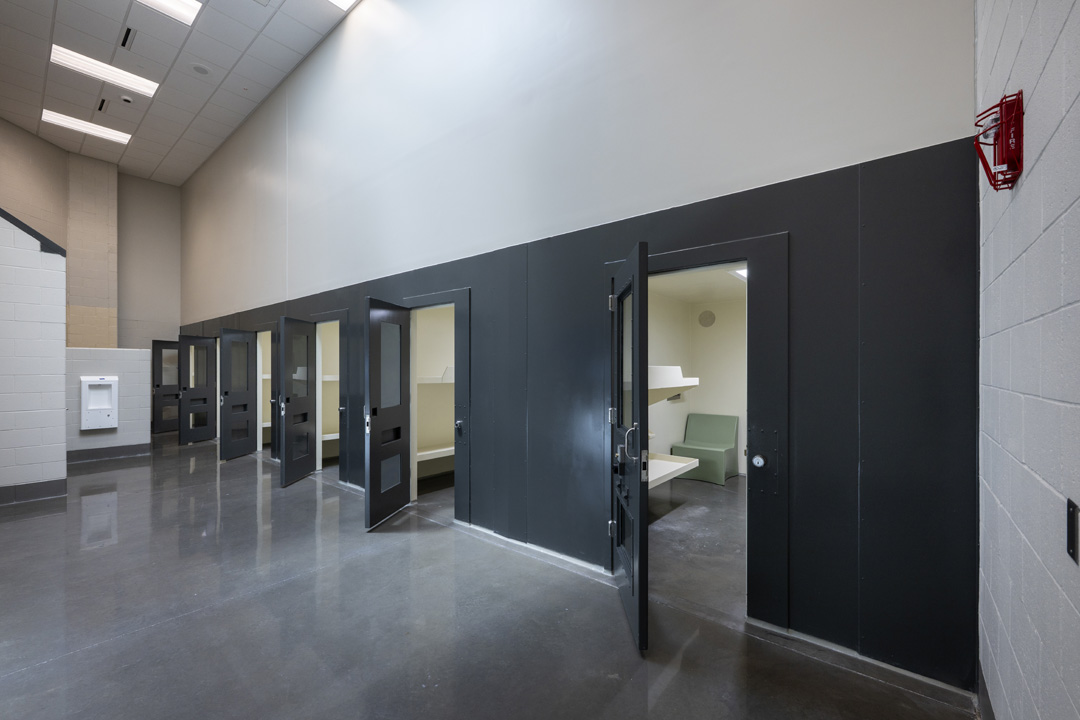
Restrictive housing houses individuals who have committed serious and violent infractions inside a jail or prison. These are the most dangerous offenders, placed in restrictive housing as a disciplinary measure and to protect staff and other incarcerated individuals.
Reducing incidents is often framed as a matter of policy or staffing. But the physical environment plays a critical role. Accountability and control are reinforced through design decisions that limit escalation while preserving order.
Design strategies that strengthen safety and accountability include:
- Daylight and views: Access to natural light reduces agitation and aggression.
- Privacy and normalcy: Thoughtful sightlines and spatial variety improve staff visibility and reduce blind spots.
- Materiality: Finishes that balance durability with warmth support operational longevity while resisting damage.
- Spaces for controlled interaction: Securely designed areas allow structured programming or mental health interventions without compromising safety.
Restrictive Housing environments rooted in security and accountability are not “soft.” They are effective. Research is clear: when facilities reinforce order through design, incidents decline and staff safety improves.
Acoustics: The Overlooked Power
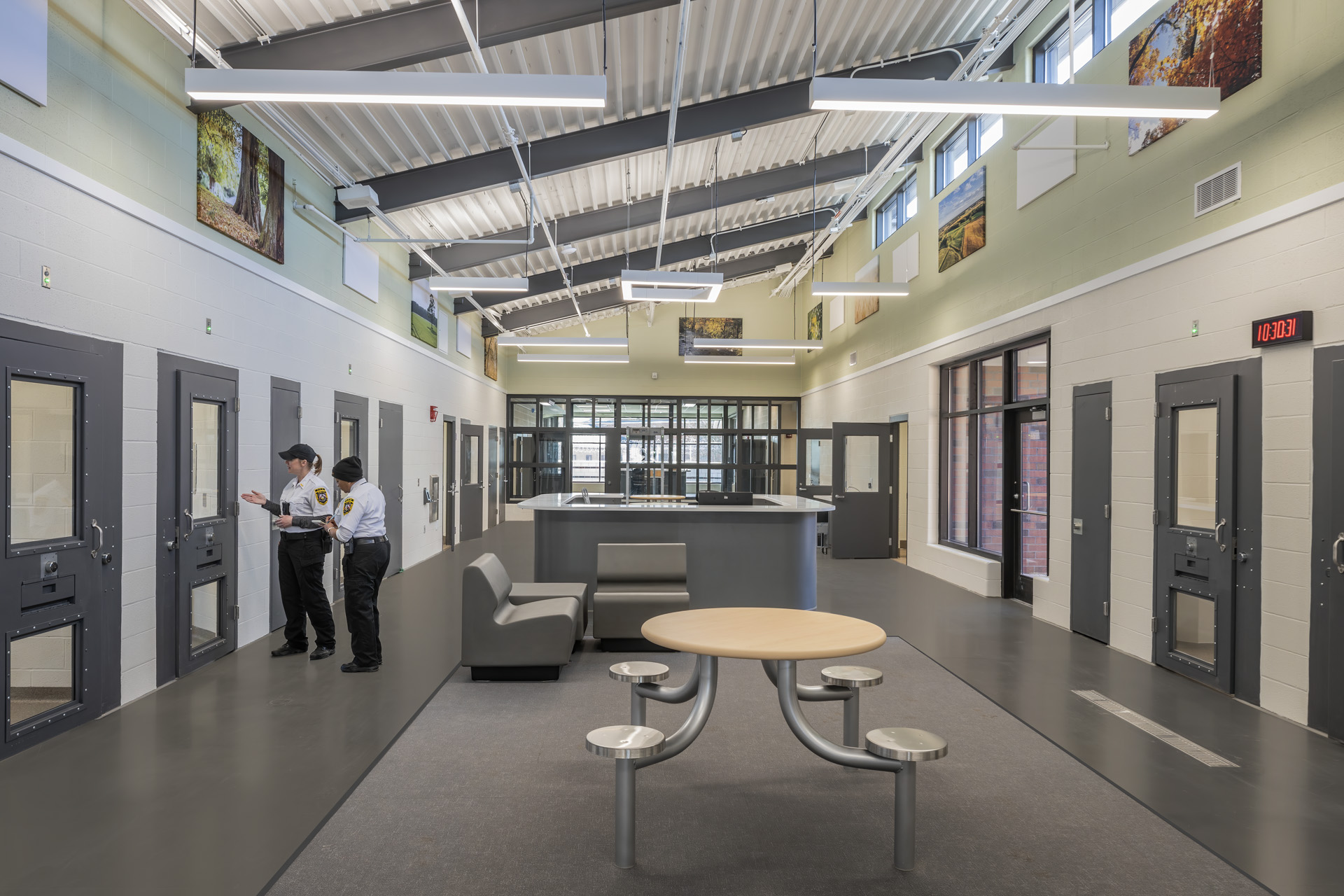
Sound is often invisible in design conversations, yet in restrictive housing it is one of the most powerful stressors. Reverberating corridors, slamming doors, mechanical noise, and shouted communication create tension. In a unit already defined by punishment, unmanaged noise amplifies agitation, fuels conflict and increases fatigue.
In restrictive housing, where stability and control are essential, acoustics directly affect safety and outcomes. A calmer sound environment helps regulate emotions, reduces hypervigilance, and lowers the risk of escalation. For staff, quieter units support clearer communication and reduce stress over long shifts.
Design strategies include:
- Acoustic treatments: Wall panels, ceiling baffles, and flooring materials that absorb sound.
- Spatial planning: Designing dayrooms and corridors to minimize echo and harsh reverberation.
- Noise zoning: Locating louder functions (HVAC, doors, mechanicals) away from sleeping and program spaces.
The benefits extend beyond comfort. Reduced noise improves behavior management, lowers incidents, and creates conditions where staff can work more safely and effectively.
Biophilic Design: Stabilizing the Most Volatile Environments
Biophilic design, the integration of natural elements into built environments, is not about aesthetics. It is about physiology, stability, and operational control. Exposure to daylight, greenery, and natural materials lowers cortisol, reduces aggression, and restores focus. In restrictive housing, where the most violent offenders may spend long hours in separation, these benefits are critical for reducing volatility.
Even small interventions matter. A narrow window with a view of a tree can de-escalate agitation. Textures that soften sterile surfaces humanize a space without compromising security. Natural light cycles help restore circadian rhythms disrupted by constant artificial lighting. For individuals in restrictive housing, these sensory cues aid in stabilizing behavior and reducing escalation.
Effective strategies include:
- Daylighting: Clerestory windows, skylights, or glazed openings that safely introduce natural light.
- Nature analogues: Durable finishes and patterns that mimic natural textures.
- Outdoor connections: Secure courtyards or small garden enclosures visible from dayrooms or accessible under strict supervision.
These are not luxuries, they are operational investments. Correctional facilities that embrace nature maintain safer conditions for all.
The Role of Color in Restrictive Housing
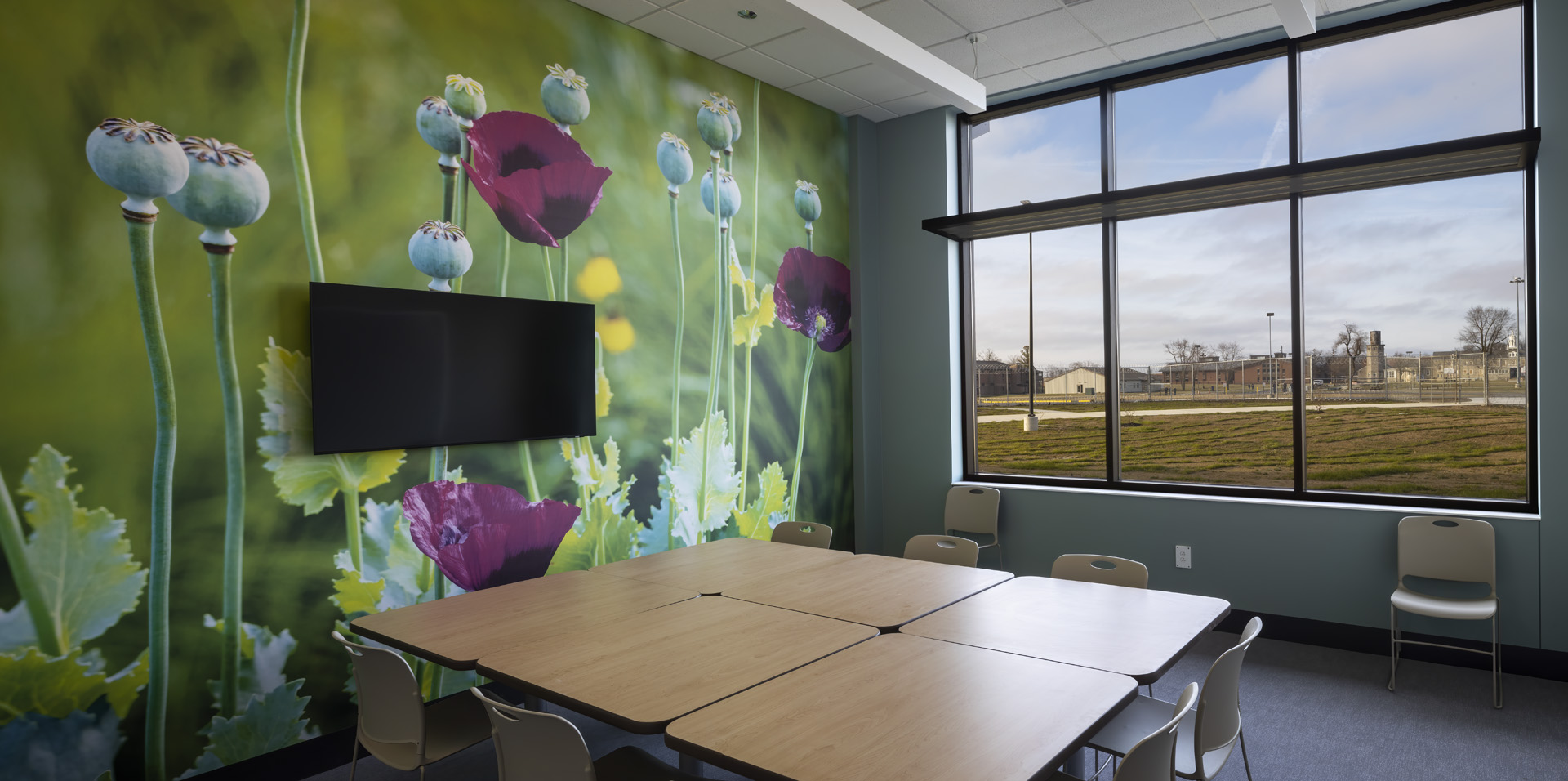
Restrictive housing units are often stark: rows of gray walls under fluorescent lights. This environment disorients, dehumanizes, and heightens stress. Color, applied with intention, is a powerful corrective.
Psychology and neuroscience confirm that color influences perception and emotion:
- Cool tones: blues and greens calm and restore.
- Neutral palettes: reduce visual noise and create comfort.
- Warm accents: provide orientation and reduce monotony.
Beyond mood, color reduces disorientation and helps staff manage environments more effectively. Thoughtful palettes mitigate the psychological strain of isolation and support stability.
Color cannot erase the challenges of restrictive housing, but it reduces unnecessary agitation and helps staff maintain control over volatile populations.

Hyper- and Hypo-De-Escalation Rooms
Traditional restrictive housing emphasizes control through isolation. Yet research shows isolation alone can worsen mental health and increase aggression. De-escalation rooms represent a different philosophy: prevention and stabilization within a highly controlled, punitive setting.
- Hyper de-escalation rooms introduce calming sensory input: dimmable lighting, sound control, calming imagery, and safe furniture. These allow individuals to self-regulate before behavior escalates further.
- Hypo de-escalation rooms provide the opposite: low-stimulation refuge. By reducing environmental triggers, they help individuals overwhelmed by sensory overload regain composure.
Design considerations include:
- Durable but calming finishes
- Flexible lighting systems
- Ventilation that supports comfort
- Secure but non-threatening furniture arrangements
The benefits are measurable: fewer uses of force, reduced staff injury, lower reliance on restraints, and improved operational outcomes. Borrowed from behavioral health, these spaces reflect a shift from pure isolation to controlled stabilization, always within a framework of punishment and accountability.
Structured Programming: Maintaining Order in Restrictive Housing
Structured programming reframes restrictive housing not as leniency but as a tool for reducing escalation, maintaining order, and preventing further harm. By embedding tightly controlled, trauma-aware principles into daily activities, these units can support stability while ensuring accountability.
Core Principles Applied to Programming in Restrictive Housing
- Safety: Programming is delivered in ways that reduce escalation risk such as predictable schedules, secure small-group settings, and staff trained in trauma-awareness.
- Choice: Even in restrictive conditions, residents can be offered limited options that promote responsibility.
- Collaboration: Step-down group programming for 2–6 residents encourages pro-social behavior in a tightly controlled setting.
- Trustworthiness: Consistency matters: reliable access to structured activities reinforces predictability and stability.
In Practice, Structured Programming May Include
- In-Cell Engagement: Self-paced learning packets, secure tablet courses, reflection journals.
- Out-of-Cell Program Rooms: Small therapy, education, or skill-building sessions in secure, acoustically treated spaces.
- Step-Down Activities: Controlled dayroom use for group discussion, art, or physical activity that aids stabilization.
- Therapeutic Interventions: Regular mental health check-ins and coping-skills workshops to reduce volatility.
- Skill-Based Progression: Tasks that foster accountability, such as peer tutoring or structured chores.
Outcomes of Well-Programmed Restrictive Housing
- Residents maintain more stable routines, reducing volatility.
- Staff report fewer incidents, greater trust, and improved morale.
- Units function as secure, stable environments rather than purely isolating ones.
Conclusion
Correctional facilities are more than places of incarceration. They are places where staff are tested, where dangerous behavior must be controlled, and where communities are impacted. Design cannot solve every challenge, but it sets the stage for what is possible.
The correctional environments of the future will not be defined solely by efficiency or security, but by their ability to reinforce safety, minimize incidents, and protect staff while maintaining stability for the highest-risk populations. When we design with intention—embedding accountability, managing acoustics, and using light and color with purpose—we create environments that allow staff to operate effectively and securely.
At the core is biophilia: the principle that people are wired to find calm in connection with nature. In restrictive housing, this foundation supports stabilization, controlled programming, and safer engagement. The result is secure facilities today and stronger communities tomorrow.