While facility design has historically focused on security and the needs of those in custody, we argue that staff well-being must become a foundational design priority.
Executive Summary
Correctional facilities are experiencing unprecedented staffing challenges with turnover rates exceeding sustainable thresholds nationwide of over 26% nationally costing on average of $25,000-$40,000 per replacement person. While facility design has historically focused on security and the needs of those in custody, this white paper argues that staff wellbeing must become a foundational design priority. Research and operational experience consistently demonstrate that environments supporting staff health, safety, and dignity directly improve retention, operational stability, and outcomes for the entire facility. This paper outlines why staff-first design is an operational imperative, identifies key architectural strategies that support workforce sustainability, and provides a framework for aligning facility design with the mission of modern corrections.
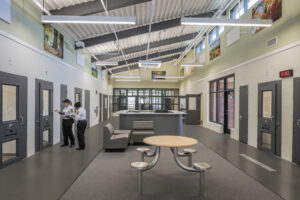
1. The Workforce Crisis Behind the Walls
When correctional facility design is discussed, the focus traditionally centers on mental health care for those in custody, development of normative environments, safety, and security. While these elements are essential, one of the most critical and impactful components of any correctional institution is often overlooked: the staff.
Correctional officers, nurses, case managers, program facilitators, maintenance personnel, and administrators operate in environments where vigilance is constant, emotions frequently run high, and physical danger is often present. Yet the spaces in which they work, often for 8 to 12 hours per day over decades-long careers, are routinely under-supported in terms of maintenance, modernization, and intentional design. In many older facilities, staff spaces have been incrementally reduced, repurposed, or eliminated altogether to accommodate operational pressures. It is not uncommon to see closets outfitted with electrical outlets because they are expected to eventually become makeshift offices.
Designing for staff must move beyond accommodation and become a core design principle. The wellbeing, performance, and longevity of staff directly influence safety, culture, and the effectiveness of every system within a correctional facility.
Why Staff Matters to the Mission of Corrections
Staff wellbeing is inseparable from core correctional outcomes, including safety, rehabilitation, and institutional stability.
- Reduced recidivism: Staff provide daily supervision, consistency, programming support, and human connection. Their presence and performance shape behavior more than any physical feature alone.
- Operational safety: A supported, stable workforce is more resilient to conflict, escalation, and crisis response.
- Sustainability: Retention is not solely a human resources concern; it is essential to budget stability, reduced training costs, and preservation of institutional knowledge.
True safety is not achieved through hardened materials alone. It is built through environments that reduce stress, support sound decision-making, and prevent long-term psychological and physical depletion among staff.
Looking Ahead: A Necessary Design Shift
Designing for staff is not a luxury, it is a cornerstone of successful correctional operations. As the industry confronts workforce shortages, evolving professional expectations, and increasing operational complexity, facilities must shift toward environments that actively support recruitment, performance, and long-term retention. When we invest in the people who carry out the mission, safety, culture, and outcomes improve for everyone.
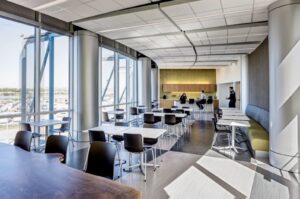
2. Staff-First Design: Core Staff Supportive Design Principles
Staff-first design begins with realistic staffing models integrated early in the programming and schematic design phases. Even the most efficient building cannot function as intended if staffing levels are insufficient. Both sworn and non-sworn personnel must be considered throughout planning and design.
During these early stages, existing staffing levels are evaluated alongside projected operational changes driven by the new design. Opportunities for efficiency are explored, but never at the expense of safety or human sustainability.
Facilities that prioritize staff consistently integrate the following Core Staff-Supportive Design Principles:
- Secure parking
- Access to daylight
- Acoustical controls
- Recruitment + younger workforce expectations
- Staff-first design = not a luxury
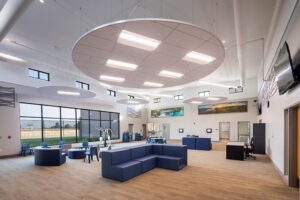
- Break room / wellness room logic
- Retention = influenced by environment
These principles are only effective when staffing levels allow personnel to meaningfully use them. As a result, retention, recruitment, and facility design are inseparable.
For younger generations entering the corrections workforce, compensation alone is rarely sufficient for long-term commitment. Purpose, culture, and physical environment increasingly shape career decisions. Staff-first design provides the physical foundation for a healthy organizational culture.
3. Design Features That Protect the People Who Protect
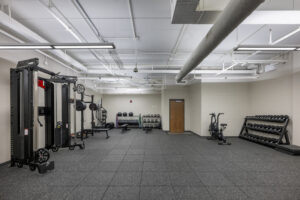
Every space in a correctional facility communicates values, not only to those in custody, but to those who serve. For decades, staff spaces have been minimized or treated as expendable. However, break rooms, wellness rooms, resource, and fitness spaces function as essential operational infrastructure.
When thoughtfully designed:
- Break rooms foster camaraderie, decompression, and peer connection.
- Wellness rooms support emotional and physiological regulation following high-stress events.
- Resource rooms enable training, communication, and professional development.
- On-site fitness spaces further reduce barriers to physical wellness and have been shown to support long-term health and reduced sick-leave usage.
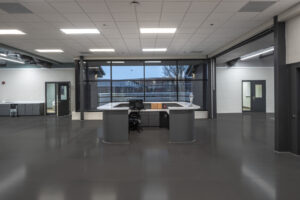
Movement is one of the highest-risk and most complex aspects of correctional operations, and one of the greatest opportunities to enhance staff safety. Circulation design governs how staff, residents, and visitors interact. Poorly planned corridors, blind corners, and conflicting pathways elevate both physical risk and cognitive load.
Evidence-based circulation strategies emphasize:
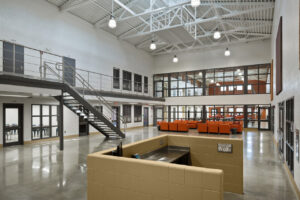
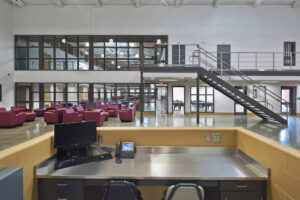
- Clear lines of sight
- Defined zones of control
- Safe response routes
- Separation of incompatible movement patterns
Effective circulation design results in calmer environments, faster response times, fewer incidents, and greater staff confidence. Visibility, predictability, and control directly support retention and long-term performance.
4. Architecture’s Impact on Retention and Morale
Being a Corrections Officer is among the most demanding professions. While policy sets expectations, the built environment shapes daily experience.
Windowless work areas, persistent noise, and lack of privacy erode morale over time. Conversely, environments that prioritize dignity and comfort send a clear message: staff matter.
Facilities that integrate daylight, acoustic regulation, safe circulation, and restorative spaces consistently demonstrate higher job satisfaction, stronger team dynamics, improved retention, and enhanced safety outcomes.
5. Human-Centered Efficiency: The New Performance Standard
Facilities fail when they treat efficiency as the entire mission. Efficiency is only half of performance; the other half is the human capacity to sustain high-risk, high-complexity work over time. Behind every secure facility is a professional workforce operating under constant pressure. Staff-centric design ensures that those who serve are supported by their environment.
A comprehensive approach integrates these 5 pillars of Staff-Centric design:
- Visibility
- Support
- Wellness
- Safety
- Sustainability
Staff stability directly influences resident behavior, institutional culture, and long-term facility performance. Stability also greatly impacts the bottom line in terms of:
- Reduced turnover saves training dollars
- Decreased injury rates lower worker’s comp exposure
- Better morale reduces sick leave staffing backfill costs
- Efficient circulation reduces required overtime
Conclusion
Modern correctional facilities cannot succeed without a strong, stable, and supported workforce. The built environment is not a passive backdrop, it actively shapes behavior, performance, and organizational health.
A staff-centric design philosophy is not an architectural preference; it is an operational imperative. Facilities that invest in staff experience are better positioned to recruit, retain, and sustain qualified professionals while delivering safer, more predictable environments.
As corrections systems confront workforce shortages and increasing complexity, the path forward is clear: design for staff first, and the entire system becomes stronger.
Key Takeaways
- Staff wellbeing and retention are inseparable from facility design
- Daylight, acoustics, wellness spaces, and visibility are operational infrastructure, not amenities
- Safe circulation and movement planning directly improve safety and morale
- Recruitment increasingly depends on workplace quality and culture
- Staff-centric design strengthens stability, performance, and outcomes system-wide