As climate-related extremes and associated losses continue to rise, resilience is no longer optional. It is essential. Resilient design helps structures adapt to long-term change, withstand hazards, and maintain function. The outcome is safer, more sustainable buildings that are better prepared for what comes next.
Resilient Design for Tomorrow
When we think of resiliency, we think of the ability to recover from a setback, to return to functionality after some type of damage. In architecture, resilient design mitigates damage from a variety of hazards, fast-tracks a structure’s return to usefulness and can even allow for a change of the building’s purpose as needs evolve.
Today’s forward-thinking architects consider resilience in all they design. They are advancing beyond static, compliance-focused mindsets toward resilience: performance-driven adaptation that combines digital tools (BIM-Building Information Modeling/digital twins), passive design, microgrids, and nature-based solutions to design resilient structures. They integrate social, environmental and building science into spaces that protect the health, safety and welfare of the public and building occupants. Looking towards the future allows thoughtful professionals to design structures that will not just “bounce back,” but “bounce forward.”
What is Resilient Design—and Why Now?
Resilient Design has three components:
- Adaptation: how a structure adapts to changing environmental, economic and social conditions over a long period of time.
- Sustainability: how a building impacts its environment and surroundings.
- Resilience: how a building reacts to impacts from its environment.
Resilient design is the practice of delivering assets that absorb shocks, adapt to long-term changes (e.g., sea-level rise, heat waves, supply chain volatility), and recover quickly to maintain safety, habitability, and function. Fundamental principles—durability, redundancy, passive strategies, local resources, and social equity—apply across scales from buildings to districts. These principles apply to designing for all kinds of hazards, from weather events to earthquakes to biohazards and risks that may be unique to a particular location or operation.
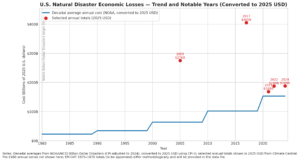
We see the urgency every day. Climate-related extremes and associated losses have risen sharply. Analyses after recent catastrophes like hurricanes, wildfires and tornadoes highlight record counts of billion-dollar damage and mounting infrastructure exposure. In today’s dollars, the decadal average cost of natural disasters in the U.S. has grown seven-fold since 1980. The age-adjusted mortality rate in the States due to heat-related deaths increased 16.8% per year between 2016 and 2023. With the frequency and variety of natural extremes – particularly in areas that were previously undeveloped – resilience is now a core business and policy priority, not an optional feature.
Determining the Right Path to Resilience
Whether building a new structure or hardening an existing one, decisions regarding the level of resilient design will be made at concept. This begins with a vulnerability assessment. Vulnerability is the degree to which a system or project is susceptible to and unable to cope with adverse effects. There are ten steps in a thorough vulnerability assessment:
- Set Parameters: Identify the area of study, scale of the study, the value of the assets that may be at risk, and the interdependencies of surrounding features and utilities.
- Assess Hazards: Identify the potential hazards—climatic, environmental, natural, economic and social—and their probabilities and frequency.
- Identify Damaging Components: What will actually cause the damage, and how is it related to the hazard? For instance, are high winds or storm surge the greatest threat from a hurricane?
- Impact Modifiers: Determine what natural or artificial features may exacerbate or reduce the impact of a hazard.
- Performance Modifiers: Examine the existing structure to identify the building characteristics that could increase damage from those impacts.
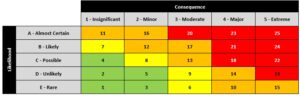
- Characterize the Impacts: Visualize the interaction of the hazards with the structure, including secondary impacts, to provide a detailed description of the physical characteristics of the damaging components that can be represented in a risk analysis matrix.
- Quantify Loads: Understand the structural requirements necessary to withstand each hazard.
- Assess Potential Damages: Compare the original design criteria loads against potential damage and the impacts on building function.
- Assess Risk: Combine and compare scenario impacts to evaluate the worst case of damage, including probabilities of loss.
- Identify Strategies: Create a prioritized matrix of potential hazard mitigation strategies including a cost/benefit analysis of each.
With an understanding of potential hazards, the projected lifespan of the structure, and the cost of various mitigation efforts, the design team can assist in determining which strategies will be employed – whether to harden and preserve an existing building or construct anew.
Benefit / Cost Analysis of Resilient Design
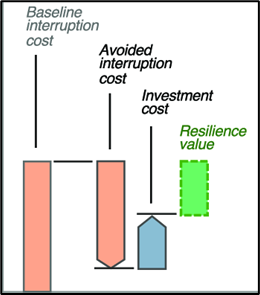
How much to invest in a resilient design project will be determined by calculating the projected cost of each strategy, the projected savings over the lifetime of the project, and the risk tolerance of the developer or end user. The design and implementation cost of any strategy is perhaps the simplest part of the equation. The projected savings include multiple components.
- Upfront Insurance Premiums: Elevated foundations, impact-rated openings, microgrids/storage, redundant systems, fire protection devices and more can provide insurance premium savings of 30% or more.
- Operating Savings: Energy reductions can come from passive/efficient systems, insulated roofing systems and impact doors and windows. Lower maintenance expenses are realized through durable assemblies.
- Risk Reduction: Resilient structures are less susceptible to damage from hazards by design. This limits repair investments and business interruptions. Businesses and facilities can maintain continuity and re-enter the market more quickly following disastrous events.
- Finance: Along with premium discounts and improved insurance underwriting, lender confidence improves with demonstrated mitigation features.
Global and national studies consistently show adaptation/mitigation Benefit Cost Ratios between 4:1 and 6:1, meaning that for every $1 invested, $4 to $6 are saved over the life of the project. Further, such projects offer broader co-benefits in health, equity, productivity and peace of mind.
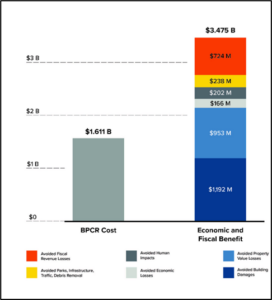
Even major community-wide resilient design projects provide benefits far beyond what can be staggering price tags. The City of New York’s Battery Park City Resilience Project is estimated to cost $1.6B, while the estimated savings of elevating Wagner Park, creating floodwalls, pump stations and other mitigating features will be more than twice that investment.
How to Design for the Future – Think Code-Plus
Minimum building codes protect life safety, but they are not optimized for long-term resilience, operating cost, or business continuity. While baseline building codes are constantly being updated and strengthened in response to evaluations of building performance during natural disasters, these codes are reactionary, responding to what has been experienced in the past. To counter the trend of ever-increasing losses, architects and engineers are beginning to design for what may happen, not just what did happen. They are thinking “code-plus.”
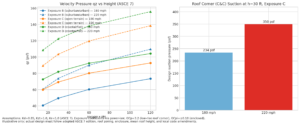
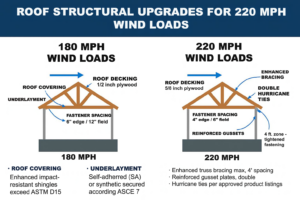
Consider this: the current Florida Building Code for the coastal wind-debris region recommends designing structures to withstand winds up to 180MPH. In October 2025, Hurricane Melissa produced wind gusts of over 250MPH in Jamaica, a speed that today’s codes do not consider. Code-plus is more proactive, intentionally exceeding minimum requirements to improve performance (resilience, energy, health) and economics (lifecycle cost, insurance, downtime).
The insurance industry recognizes the value in going beyond code. Today’s building codes require homes to be built at one foot above base flood elevation (BFE+1). Yet homes built three feet above flood (BFE+3) will see a 30% reduction in insurance premiums compared to those at BFE+1. Similarly, homes built with fire-resistant materials and fire suppression systems installed – whether a requirement in their jurisdiction or not—can see savings in premiums of up to 20%.
Resilient design transforms buildings and infrastructure from code-minimum assets into future-ready systems that withstand shocks, adapt to change, and recover rapidly—while delivering strong financial returns over their lifecycle. It blends climate-risk analysis, passive/active systems, redundancy, material durability, and community integration to protect people, assets, and ecosystems.
How to Design to Code-Plus Standards
Basic building codes can be exceeded in a variety of ways. It could mean choosing to attach standing-seam metal roof coverings in the field to a roof deck every six inches instead of every twelve inches. It could mean doubling the thickness of trusses to better prevent uplift or ensuring that a building is elevated above flood on piers tied to caprock to avoid displacement. It could mean taking basic code from a region with stronger codes and applying them in a different district: applying wind-borne debris regulations in areas away from the coast, building as though a site is in a fire hazard severity zone when it is not currently designated as such.
Architects and engineers evaluate designs using several types of standards to address different aspects of a project depending on its location and the client’s goals.
- Wind/Envelope: FORTIFIED® roof assemblies (sealed deck, stronger edges, better attachment, impact-resistant shingles), impact-rated doors/windows, rated garage doors, improved fastening schedules.
- Flood: Elevation BFE+1 to +2 ft (or above LiMWA (Limit for Moderate Wave Action)/Coastal A Zone guidance) and compliant enclosures for access/parking only; flood openings and breakaway walls designed per ASCE 24.
- Energy: Meeting or exceeding ASHRAE 90.1-2022 (commercial) and latest IECC (residential), with attention to thermal bridging, air-leakage testing, and on-site renewables.
- Community/Continuity: Redundant power (gen-ready, storage-ready), passive survivability (ventilation/solar shading), and hub-of-last-resort design for critical facilities in line with resilience planning guides.
Ever-curious by nature, architects and engineers further research new technologies and traditional techniques to design more resilient structures. For instance, timber frames joined with wooden pegs and interlocking joints can absorb and dissipate energy during earthquakes or high winds, reducing catastrophic failure. Adobe or rammed-earth walls provide thermal mass and fire resistance. Bioswales, green roofs, and permeable pavements manage stormwater and reduce urban heat. Ultra-High-Performance Concrete (UHPC) provides exceptional durability against hurricanes, floods, and seismic forces. Many factors and technologies are evaluated to deliver resilient structures that meet a client’s goals.
Combined Hazards
Often, designing to mitigate one hazard provides additional resilient design benefits:
- Impact windows and doors can enhance security, improve acoustic insulation and reduce heat gain/loss and thus energy expense.
- Non-combustible exterior cladding and fire-resistant materials improve durability against hurricanes, protect against wind-driven rain and hail damage and reduce maintenance costs.
- Elevated buildings can protect against pests, moisture-related mold and even wildfire by reducing ground-level ignition risk.
- Seismic bracing can reduce the risk of collapse during hurricanes and tornadoes.
- Green roofs not only address urban heat and stormwater runoff, but improve insulation, reduce the spread of fire and mitigate air pollution.
Conversely, some efforts to minimize damage from one hazard could increase risk from another hazard. Elevated structures can be more vulnerable to wind damage. Sealed building envelopes reduce natural ventilation, which can increase indoor heat risk during power outages (heat waves) and raise indoor air quality issues if HVAC fails. Flood barriers can trap water if drainage fails. Professionals must consider all this while designing for the utmost resilience and efficiency.
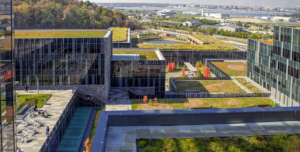
Green roofs at the U.S. Coast Guard headquarters in Washington, D.C.
Implementation Framework
Professionals consider many factors and employ a variety of techniques in designing resilient structures for the future.
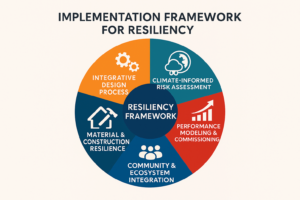
- Climate-Informed Risk Assessment: To understand potential risks, local hazard data and future projections (non-stationary rainfall, heat, surge) are used to inform site strategy and loads. Risks from similar yet distant locations may also be evaluated to provide a deeper perspective and understanding of future vulnerabilities.
- Integrative Design Process: Resilience is considered not only as part of the physical structure, but also in terms of on-going operations and maintenance, as these are often greater long-term costs than initial construction. Principles from the AIA Resilient Project Process Guide and Resilient Design Institute are applied from initial design concept through operational and occupancy instructions.
- Performance Modeling & Commissioning: Architects and engineers model future performance through the design process and after they have been in use. BIM/digital twins, energy/hydraulic models, whole-building airtightness, and post-occupancy verification can ensure that buildings are robust and operating at optimum efficiency as designed.
- Material & Construction Resilience: Selecting the right materials is essential in resilient construction. Durable, repairable, region-appropriate assemblies, and modularity for phased adaptation are an integral part of the design.
- Community & Ecosystem Integration: Resilient design takes into account the surrounding community and environment. Blue-green networks, social equity amenities, and resilience hubs for health, power, and services during outages are considered during development.
The result of following this framework inevitably leads to designing projects that will exceed most baseline building codes.
ROI: Lifecycle Economics of Code-Plus
To understand the benefit of code-plus design, let’s model a 25,000sf office building in a high velocity wind zone that is 3 feet above sea level in Miami Beach. Code-plus design would include impact-rated openings, sealed roof deck and enhanced fasteners/straps, braced parapets and rooftop unit anchorage, elevated/protected MEP, backup power, envelope/MEP commissioning, and third-party verification (e.g., FORTIFIED Commercial).
We will make these assumptions which align with FEMA BCA (Benefit Cost Analysis) methodology (discounting over project life), including recent FEMA updates at a 3.1% discount rate which increases the present value of mitigation benefits.
- Base construction cost: $250/sf in HVHZ (High Velocity Hurricane Zone) for Class B office = $6.25M.
- Code-plus premium: 6% (HVHZ enhancements, generator and evaluation/commissioning) for an additional $375,000 CAPEX (capital expense).
- Annual damaging event probability (wind/rain/surge that causes repair + downtime): 5% (HVHZ context).
- Expected per-event losses (for code-compliant only):
- Direct building & contents: $1.10M
- Business interruption (tenants & operating expense): $0.60M
- Total: $1.70M
- Loss reduction (code-plus): 45% (mid-range from IBHS/NIBS findings for bundled measures).
- Insurance savings: $70k/year (wind mitigation + opening protection credits; carrier/inspection-verified).
- Downtime avoided: 12 days/event at $20k/day contribution margin (expected value).
- Incremental O&M for code-plus: $10k/year (inspections, generator maintenance).
- Residual value uplift at year 30 (insurability/marketability): 1.5% of base CAPEX.
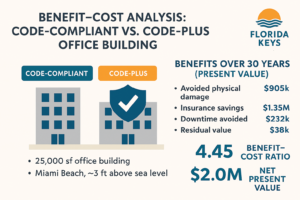
Clearly, the up-front investment in superior resilient design pays dividends over the life of the property.
Conclusion: Building for Tomorrow Starts Today
Resilient design is no longer optional—it is a necessity in an era of accelerating climate risks and economic volatility. By embracing a ‘code-plus’ mindset, architects, engineers, and developers can create structures that not only withstand shocks but adapt and thrive in changing conditions. The upfront investment in resilience pays dividends through reduced losses, lower insurance premiums, and enhanced community safety. Ultimately, resilient design is about more than protecting assets—it’s about safeguarding lives, ensuring continuity, and building a sustainable future. The question is not whether we can afford to design for resilience, but whether we can afford not to.
References
Adji Abbas (November 26, 2024), How Do Architects Design for Climate Resilience?, Architect Today, https://architecttoday.com/qa/how-do-architects-design-for-climate-resilience/
Allplan (August 21, 2025), Climate-Responsive and Resilient Building: Sustainable Architecture for the Future, https://www.allplan.com/blog/climate-responsive-and-resilient-design/
Lilliana Alvarez (April 2025) Designing for Resilience: How Modern Architecture Protects Communities, Amazing Architecture, https://amazingarchitecture.com/articles/designing-for-resilience-how-modern-architecture-protects-communities
American Institute of Architects (2024), Resilience + Adaptation Certificate Series
American Society of Engineers (June 2024) Wind Loads – Impacts from ASCE 7-22, https://www.floridabuilding.org/fbc/thecode/2023_Code_Development/2023_Code_Resources/ASCE-7-22_Wind_Loads_Fact_Sheet.pdf
Apoorva H P Achar (September 17, 2024), Resilient Design: Principles, Architecture, and the Future of Sustainable Building, Brick & Bolt, https://www.bricknbolt.com/blogs-and-articles/home-design-guide/resilient-design-construction-principles-architecture
Cliff Barros (January 30, 2025), GAF and IHBS Establish First-of-its-Kind Alliance to Expand Access to FORTIFIED Building Program, insurance Institute for Business and Home Safety, https://ibhs.org/ibhs-news-releases/gaf-and-ibhs-establish-first-of-its-kind-alliance-to-expand-access-to-fortified-roofing-program-protecting-more-homes-before-and-after-severe-weather-events/
Marie Buhl & S. Markolf (2023), A review of emerging strategies for incorporating climate change considerations into infrastructure planning, design and decision making, Sustainable and Resilient Infrastructure, https://doi.org/10.1080/23789689.2022.2134646
CalcDomain (2025), ASCE 7-22 Wind Load Calculator, https://calcdomain.com/asce-7-22-wind-load
Florida Building Code, (2023), Building, Eighth Edition, 1609.1.1 Determination of wind loads, https://codes.iccsafe.org/s/FLBC2023P2/chapter-16-structural-design/FLBC2023P2-Ch16-Sec1609.1.1
Stacey Freed (June 6, 2025), The future is now: Designing for climate, risk and resilience at AIA25, American Institute of Architects, https://www.aia.org/aia-architect/article/future-now-designing-climate-risk-and-resilience-aia25
Gallagher (2024), Eight Architecture and Engineering Trends to Watch in 2025, https://www.ajg.com/news-and-insights/eight-architecture-and-engineering-trends-to-watch-in-2025/
Insurance Institute for Business and Home Safety (2025), FORTIFIED Building Program, https://fortifiedhome.org/
Insurance Institute for Business and Home Safety (2025), FORTIFIED Financial Incentives, https://fortifiedhome.org/
Kumi Kitamori & Michael Mullan (August 7, 2025), The ‘new normal’: building infrastructure for a climate-resilient future, Institution of Civil Engineers, https://www.ice.org.uk/news-views-insights/inside-infrastructure/build-infrastructure-for-climate-resilient-future
Therese P. McAllister (September 24, 2025), Development and Implementation of the Community Resilience Planning Guides, National Institute of Standards and Technology, https://www.nist.gov/community-resilience/planning-guide
Kelly McGee (2022), A Place Worth Protecting: Rethinking Cost-Benefit Analysis Under FEMA’s Flood-Mitigation Programs, The University of Chicago Law Review, https://lawreview.uchicago.edu/print-archive/place-worth-protecting-rethinking-cost-benefit-analysis-under-femas-flood-mitigation
Sejal Mengaji (2025), The Future of Resilient Architecture: Trends and Challenges, Rethinking the Future, https://www.re-thinkingthefuture.com/architectural-community/a12168-the-future-of-resilient-architecture-trends-and-challenges/
Benjamin M. Miller, et.al. (2023), The Cost of Cost Effectiveness, Homeland Security Operational Analysis Center, https://www.rand.org/content/dam/rand/pubs/research_reports/RRA2100/RRA2171-1/RAND_RRA2171-1.pdf
Monroe County, Florida (2025), Building Responsibly & Requirements, https://www.monroecounty-fl.gov/692/Building-Responsibly-Requirements
Carolina Montano-Owen, PhD, et al. (August 2025), Developing a Strategy for Climate Resilient Buildings, World Building Council, https://worldgbc.org/wp-content/uploads/2025/08/WorldGBC-Resilience-Strategy-paper.pdf
National Weather Service (2024), Weather Related Fatality and Injury Statistics, https://www.weather.gov/hazstat/
New Development Bank & AXA Climate (2025), Building Climate resilience in Infrastructure Projects: A Brief for Investors, https://www.ndb.int/wp-content/uploads/2024/03/Building-Climate-Resilience-in-Infrastructure-Projects-A-Brief-for-Investors.pdf
NOAA National Centers for Environmental Information (2025), Billion-Dollar Weather and Climate Disasters, https://www.ncei.noaa.gov/access/billions/
Resilient Design Institute (2025), The Resilient Design Principles, https://www.resilientdesign.org/the-resilient-design-principles/
Laura Rote (December 6, 2024), 12 Resilient Design Principles to Build for the Future, gb&d, https://gbdmagazine.com/resilient-design-principles/
The 2025 Florida Statutes, Chapter 627, Insurance Rates and Contracts, https://www.leg.state.fl.us/statutes/index.cfm?App_mode=Display_Statute&URL=0600-0699/0627/Sections/0627.0629.html
U.S. Department of Energy (March 1, 2024), DOE Issue Updated Model Energy Code Determination for Commercial Buildings, https://content.govdelivery.com/accounts/USEERE/bulletins/38e35b1
About the Author
Heather Carruthers, Director of Business Development, Southeast Region at K2M Design, holds a Certificate in Adaptation and Resilience from the American Institute of Architects. Her interest in resilience and sustainability began following Florida’s 2004 and 2005 hurricane seasons with her leadership in Fair Insurance Rates in Monroe, a grassroots organization. Based on considerable research and analysis into the relationship between hurricane damage, building codes and the building stock of the Florida Keys, FIRM successfully lobbied the State to force Citizens Property Insurance to lower interest rates, saving the community hundreds of millions of dollars over the past 20 years. Prior to her engagement with K2M, she served as a Monroe County Commissioner in the Florida Keys where she was a champion for investing in sustainability and resilience, supporting the creation of the Southeast Florida Climate Compact and serving on the South Florida Regional Planning Council and the Seven50 initiative to create a resilient region.