Author Archives: k2mdesign

  1. Designing for Operational Reliability: How Facility Design Shapes Staff Performance, Safety, and Daily Operations

    Comments Off on Designing for Operational Reliability: How Facility Design Shapes Staff Performance, Safety, and Daily Operations

    Executive Summary

    Correctional facilities are long-lived assets that must support operations across decades of change. Most Sheriffs inherit buildings that were designed for different staffing models, population profiles, and operational expectations. Over time, this misalignment creates friction, inefficiency, and risk.

    This white paper examines a critical but often under-recognized factor in correctional operations: the role of facility design in shaping daily performance.

    Design does not replace staffing, policy, or leadership. It directly influences how effectively those elements’ function. It affects how clearly staff can supervise, how efficiently they can move, how quickly they can respond, and how reliably they can make decisions under pressure.

    Across correctional environments, consistent patterns emerge:

    • Operational risk concentrates during movement, not housing
    • Limited visibility increases cognitive load and slows response
    • Inefficient layouts drive unnecessary staffing demand
    • Maintenance disruptions introduce avoidable custody risk
    • Targeted improvements can significantly reduce operational friction

    For Sheriffs and decision-makers, the implication is clear: the built environment is not a fixed constraint. It is an operational variable that can be evaluated, improved, and aligned with current needs.  Facilities that perform most reliably are not those that demand more from staff, they are those that quietly demand less.


    Introduction: The Facilities Sheriffs Inherit

    Correctional facilities routinely outlast the administrations that oversee them. As a result, most Sheriffs lead within buildings designed for a different era, one defined by different staffing assumptions, population dynamics, and operational expectations.  What once functioned adequately can become increasingly fragile as conditions evolve.

    Staffing models shift in response to workforce constraints. Classification profiles become more complex. Programming expands. Technology becomes more integrated into daily operations.  Medical needs evolve.  Facility design, however, remains largely static.

    When the physical environment no longer aligns with operational reality, the burden transfers to staff. Workarounds become routine. Inefficiencies become normalized.  Over time, this misalignment creates measurable pressure within the system:

    • Increased staff fatigue
    • Slower response times
    • Reduced supervision clarity
    • Greater reliance on informal processes

    While Sheriffs do not control the original design of their facilities, they are not without influence. The most effective leaders recognize that the built environment can be assessed, measured, and improved to better support operations.

    This shift, from accepting the facility as a constraint to managing it as a variable, is foundational to improving operational reliability.


    Design as an Operational Force

    Facility design is often treated as background infrastructure, static and secondary to staffing and policy decisions. Operationally, it is neither neutral nor passive.  Design shapes how work is performed. It influences how staff move, where they position themselves, what they can see, how they communicate, and how quickly they can respond.

    These impacts are cumulative rather than immediate, which is why they are often overlooked. Over time, however, small inefficiencies compound:

    • Increased travel distances reduce time available for supervision
    • Visibility gaps create persistent uncertainty
    • Poor adjacencies introduce ongoing staffing pressure

    The result is not a single point of failure, but a gradual erosion of operational stability.  Recognizing design as an operational force allows leaders to understand not only what is happening in their facility, but why and where the environment itself is contributing to that outcome.


    How Design Shapes Staff Workload

    Correctional officers carry the operational load of a facility every shift. They manage supervision, movement, response, and decision-making in environments that demand sustained attention.  Facility design directly affects how heavy that load becomes.

    Key factors include:

    • Travel distances that pull staff away from supervision
    • Sightline limitations that require constant repositioning
    • Fragmented layouts that create overlapping responsibilities
    • Inefficient adjacencies that increase escort demand

    Individually, these conditions may seem manageable. Collectively, they increase both physical and cognitive workload.  When staffing levels are constrained, as they often are, these inefficiencies become more consequential. They directly affect an officer’s ability to maintain consistent supervision, respond within critical timeframes, and make reliable decisions under pressure.

    Over time, elevated workload contributes to fatigue, increased error rates, and higher turnover. In many jurisdictions, correctional officer turnover can approach or exceed 30%, with replacement costs often estimated around $75,000 per officer.  Design is not the sole cause of these outcomes, but it is a contributing factor that can either mitigate or amplify them.


    Movement as a Concentration of Risk

    Operational risk in correctional environments is not evenly distributed. It concentrates during movement.  Movement introduces a convergence of variables:

    • Increased officer-to-inmate interaction
    • Reduced static supervision coverage
    • Compressed decision-making timelines
    • Limited response options

    When facility layouts require excessive or poorly coordinated movement, these risks multiply.  Common design-related challenges include:

    • Long distances between housing and key services
    • Misaligned adjacencies between programs and classification levels
    • Circulation paths that create bottlenecks or blind transitions

    These conditions result in additional escorts, extended movement windows, delayed response capability, and increased opportunities for incidents.  In one midwestern facility, reconfiguring program adjacencies reduced daily inmate movement by more than 30%, allowing staff to shorten movement windows and reallocate time back to direct supervision, without increasing staffing levels.

    Reducing movement is not about convenience. It is about concentrating staff resources where they are most effective and minimizing exposure to high-risk conditions.


    Visibility as Operational Clarity

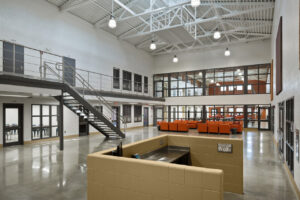
    Visibility is often framed in terms of surveillance technology. Operationally, it begins with spatial geometry.  Cameras document events as they occur. Sightlines influence whether those events escalate in the first place.

    Effective visibility allows officers to:

    • Observe activity proactively
    • Supervise multiple areas simultaneously
    • Maintain situational awareness without excessive movement

    When visibility is limited, staff must compensate by repositioning frequently, dividing attention across multiple areas, and relying more heavily on communication systems.  These adjustments increase cognitive load and reduce response efficiency.

    Visibility is not about expanding surveillance, it is about reducing uncertainty. Facilities designed with clear sightlines support faster threat recognition, more confident decision-making, and more stable supervision.


    Cognitive Load and Decision Reliability

    Correctional operations require continuous decision-making under pressure. Officers must assess situations quickly, often with incomplete information, in environments characterized by noise, interruption, and competing demands.  Facility design directly shapes this cognitive environment.

    Factors that increase cognitive load include:

    • Complex or unclear circulation paths
    • Visual clutter and poor environmental legibility
    • High noise levels and poor acoustics
    • Frequent transitions between spaces

    As cognitive load increases, decision speed slows, error likelihood rises, and situational awareness degrades, particularly during later shifts when fatigue compounds these effects.  Facilities that support decision reliability simplify navigation, reduce unnecessary stimuli, and provide clear visual organization.  These are not aesthetic considerations. They are operational ones.


    When Maintenance Becomes an Operational Risk

    Maintenance is often treated solely as a facilities issue. In correctional environments, it is also an operational concern.  Every maintenance activity introduces disruption:

    • Staff must supervise external personnel
    • Movement patterns are altered
    • Secure areas may be temporarily compromised

    When facilities are not designed to accommodate maintenance efficiently, these impacts intensify.  Common challenges include:

    • Lack of dedicated service access routes
    • Systems that require shutdowns affecting multiple areas
    • Inaccessible infrastructure requiring extended intervention

    These conditions divert staff from core responsibilities and disrupt established routines.  Facilities that perform more reliably anticipate maintenance needs through design providing dedicated access, minimizing escort requirements, and allowing systems to be serviced without widespread disruption.

    Maintenance is unavoidable. Its operational impact is not.


    Improving the Facility You Were Handed

    Most Sheriffs will not build a new facility. They will lead within the one they inherited.  This reality does not limit the ability to improve operations.  Targeted, incremental changes can significantly reduce operational friction without requiring full reconstruction. Opportunities often include:

    • Adjusting staff post locations to improve visibility
    • Reconfiguring spaces to align with actual supervision patterns
    • Reducing unnecessary movement through zoning adjustments
    • Prioritizing upgrades in high-stress or high-risk areas

    These interventions are not intended to eliminate all inefficiencies. They are designed to reduce daily burden, improve consistency, and address the most impactful sources of friction. Small, well-informed changes can produce meaningful improvements in performance and reliability.


    Capital Planning for Operational Impact

    Capital planning is often driven by maintenance needs or regulatory requirements. It also presents an opportunity to address operational inefficiencies.  Effective capital planning connects physical conditions to operational performance and financial outcomes:

    • Poor visibility increases staffing demand and labor costs
    • Inefficient movement contributes to slower response times and higher incident risk
    • High turnover drives recruitment and training costs

    In public-sector environments, where long-term ownership remains with the County, capital decisions should be evaluated not only on initial cost, but on lifecycle performance, staffing impact, and operational stability over time.

    By identifying where design contributes to these outcomes, leaders can prioritize investments that deliver measurable operational benefits.  Capital planning, when aligned with operations, becomes a tool for improving performance, not just maintaining assets.


    A Framework for Reducing Operational Friction

    Improving facility performance requires a structured approach: 

    1. Identify – Document where operational friction occurs:
    • Movement inefficiencies
    • Visibility limitations
    • Maintenance disruptions
    1. Measure – Assess impact on:
    • Staff time
    • Response capability
    • Incident patterns
    1. Prioritize – Focus on high-impact areas that:
    • Affect daily operations
    • Increase staff burden
    • Present elevated risk
    1. Implement – Introduce targeted, feasible interventions:
    • Spatial adjustments
    • Process alignment with design
    • Incremental capital improvements
    1. Advocate – Use documented data to support:
    • Budget requests
    • Policy discussions
    • Long-term planning

    This approach allows Sheriffs to move from reactive problem-solving to proactive operational management.


    Conclusion: Designing for Operational Reliability

    Facility design is not a secondary consideration in correctional operations. It is a foundational component of how reliably those operations’ function.  When design introduces friction, staff absorb the burden. When design aligns with operational needs, performance stabilizes.

    Sheriffs are not passive recipients of the facilities they inherit. They are positioned to identify where design impacts operations, advocate for targeted improvements, and align facilities with current and future needs.  Facilities that perform most effectively are not those that demand more from their staff. They are those who quietly demand less.

    Designing for operational reliability is not about creating ideal conditions. It is about creating environments that support safe, consistent performance every shift, every day.
  2. Designing for Staff: Creating Safe, Supportive, and Sustainable Work Environments in Corrections

    Comments Off on Designing for Staff: Creating Safe, Supportive, and Sustainable Work Environments in Corrections

    Executive Summary

    Correctional facilities are experiencing unprecedented staffing challenges with turnover rates exceeding sustainable thresholds nationwide of over 26% nationally costing on average of $25,000-$40,000 per replacement person. While facility design has historically focused on security and the needs of those in custody, this white paper argues that staff wellbeing must become a foundational design priority. Research and operational experience consistently demonstrate that environments supporting staff health, safety, and dignity directly improve retention, operational stability, and outcomes for the entire facility. This paper outlines why staff-first design is an operational imperative, identifies key architectural strategies that support workforce sustainability, and provides a framework for aligning facility design with the mission of modern corrections.

    1. The Workforce Crisis Behind the Walls

    When correctional facility design is discussed, the focus traditionally centers on mental health care for those in custody, development of normative environments, safety, and security. While these elements are essential, one of the most critical and impactful components of any correctional institution is often overlooked: the staff.

    Correctional officers, nurses, case managers, program facilitators, maintenance personnel, and administrators operate in environments where vigilance is constant, emotions frequently run high, and physical danger is often present. Yet the spaces in which they work, often for 8 to 12 hours per day over decades-long careers, are routinely under-supported in terms of maintenance, modernization, and intentional design. In many older facilities, staff spaces have been incrementally reduced, repurposed, or eliminated altogether to accommodate operational pressures. It is not uncommon to see closets outfitted with electrical outlets because they are expected to eventually become makeshift offices.

    Designing for staff must move beyond accommodation and become a core design principle. The wellbeing, performance, and longevity of staff directly influence safety, culture, and the effectiveness of every system within a correctional facility.

    Why Staff Matters to the Mission of Corrections

    Staff wellbeing is inseparable from core correctional outcomes, including safety, rehabilitation, and institutional stability.

    • Reduced recidivism: Staff provide daily supervision, consistency, programming support, and human connection. Their presence and performance shape behavior more than any physical feature alone.
    • Operational safety: A supported, stable workforce is more resilient to conflict, escalation, and crisis response.
    • Sustainability: Retention is not solely a human resources concern; it is essential to budget stability, reduced training costs, and preservation of institutional knowledge.

    True safety is not achieved through hardened materials alone. It is built through environments that reduce stress, support sound decision-making, and prevent long-term psychological and physical depletion among staff.

    Looking Ahead: A Necessary Design Shift

    Designing for staff is not a luxury, it is a cornerstone of successful correctional operations. As the industry confronts workforce shortages, evolving professional expectations, and increasing operational complexity, facilities must shift toward environments that actively support recruitment, performance, and long-term retention. When we invest in the people who carry out the mission, safety, culture, and outcomes improve for everyone.

    2. Staff-First Design: Core Staff Supportive Design Principles

    Staff-first design begins with realistic staffing models integrated early in the programming and schematic design phases. Even the most efficient building cannot function as intended if staffing levels are insufficient. Both sworn and non-sworn personnel must be considered throughout planning and design.

    During these early stages, existing staffing levels are evaluated alongside projected operational changes driven by the new design. Opportunities for efficiency are explored, but never at the expense of safety or human sustainability.

    Facilities that prioritize staff consistently integrate the following Core Staff-Supportive Design Principles:

    • Secure parking
    • Access to daylight
    • Acoustical controls
    • Recruitment + younger workforce expectations
    • Staff-first design = not a luxury
    • Break room / wellness room logic
    • Retention = influenced by environment

    These principles are only effective when staffing levels allow personnel to meaningfully use them. As a result, retention, recruitment, and facility design are inseparable.

    For younger generations entering the corrections workforce, compensation alone is rarely sufficient for long-term commitment. Purpose, culture, and physical environment increasingly shape career decisions. Staff-first design provides the physical foundation for a healthy organizational culture.

    3. Design Features That Protect the People Who Protect

    Every space in a correctional facility communicates values, not only to those in custody, but to those who serve.  For decades, staff spaces have been minimized or treated as expendable. However, break rooms, wellness rooms, resource, and fitness spaces function as essential operational infrastructure.

    When thoughtfully designed:

    • Break rooms foster camaraderie, decompression, and peer connection.
    • Wellness rooms support emotional and physiological regulation following high-stress events.
    • Resource rooms enable training, communication, and professional development.
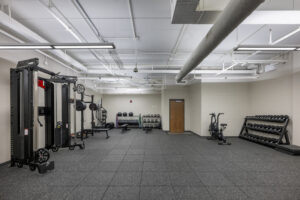
    • On-site fitness spaces further reduce barriers to physical wellness and have been shown to support long-term health and reduced sick-leave usage.

    Movement is one of the highest-risk and most complex aspects of correctional operations, and one of the greatest opportunities to enhance staff safety. Circulation design governs how staff, residents, and visitors interact. Poorly planned corridors, blind corners, and conflicting pathways elevate both physical risk and cognitive load.

    Evidence-based circulation strategies emphasize:

    • Clear lines of sight
    • Defined zones of control
    • Safe response routes
    • Separation of incompatible movement patterns

    Effective circulation design results in calmer environments, faster response times, fewer incidents, and greater staff confidence. Visibility, predictability, and control directly support retention and long-term performance.

    4. Architecture’s Impact on Retention and Morale

    Being a Corrections Officer is among the most demanding professions. While policy sets expectations, the built environment shapes daily experience.

    Windowless work areas, persistent noise, and lack of privacy erode morale over time. Conversely, environments that prioritize dignity and comfort send a clear message: staff matter.

    Facilities that integrate daylight, acoustic regulation, safe circulation, and restorative spaces consistently demonstrate higher job satisfaction, stronger team dynamics, improved retention, and enhanced safety outcomes.

    5. Human-Centered Efficiency: The New Performance Standard

    Facilities fail when they treat efficiency as the entire mission. Efficiency is only half of performance; the other half is the human capacity to sustain high-risk, high-complexity work over time.  Behind every secure facility is a professional workforce operating under constant pressure. Staff-centric design ensures that those who serve are supported by their environment.

    A comprehensive approach integrates these 5 pillars of Staff-Centric design:

    • Visibility
    • Support
    • Wellness
    • Safety
    • Sustainability

    Staff stability directly influences resident behavior, institutional culture, and long-term facility performance.  Stability also greatly impacts the bottom line in terms of:

    • Reduced turnover saves training dollars
    • Decreased injury rates lower worker’s comp exposure
    • Better morale reduces sick leave staffing backfill costs
    • Efficient circulation reduces required overtime

    Conclusion

    Modern correctional facilities cannot succeed without a strong, stable, and supported workforce. The built environment is not a passive backdrop, it actively shapes behavior, performance, and organizational health.

    A staff-centric design philosophy is not an architectural preference; it is an operational imperative. Facilities that invest in staff experience are better positioned to recruit, retain, and sustain qualified professionals while delivering safer, more predictable environments.

    As corrections systems confront workforce shortages and increasing complexity, the path forward is clear: design for staff first, and the entire system becomes stronger.

    Key Takeaways

    • Staff wellbeing and retention are inseparable from facility design
    • Daylight, acoustics, wellness spaces, and visibility are operational infrastructure, not amenities
    • Safe circulation and movement planning directly improve safety and morale
    • Recruitment increasingly depends on workplace quality and culture
    • Staff-centric design strengthens stability, performance, and outcomes system-wide


  3. Reimagining Restrictive Housing: Design Strategies for Safety, Control, and Stability

    Comments Off on Reimagining Restrictive Housing: Design Strategies for Safety, Control, and Stability

    Executive Summary

    Correctional environments are more than buildings; they are reflections of our values. For decades, facilities prioritized efficiency and control, often at the expense of long-term effectiveness. The results are familiar: high recidivism, staff burnout, poor mental health, and rising public costs.

    A shift has occurred. Research and practice now confirm what many in the field have long recognized: the built environment directly shapes behavior, stress, and safety. Design is not neutral. Spaces that are carefully structured to reinforce control, reduce volatility, and support staff safety create stability and more effective operations.

    This whitepaper highlights six design strategies reshaping restrictive housing today:

    • Safety and accountability as the foundation for secure environments
    • Acoustics as a critical factor in behavior regulation and staff wellness
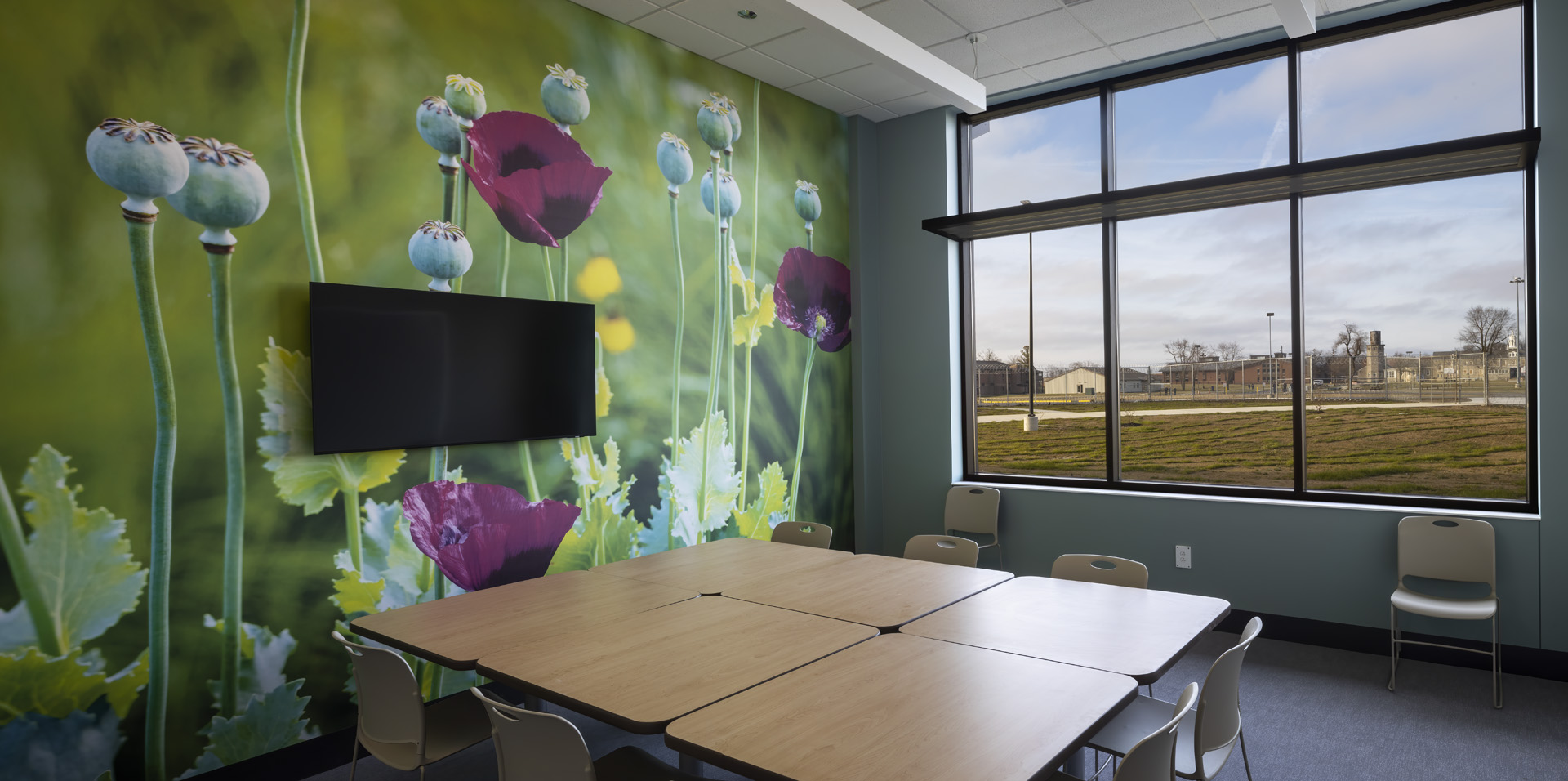
    • Biophilic design as a stabilizing tool that reduces volatility
    • Color as an active regulator of mood, orientation, and perception
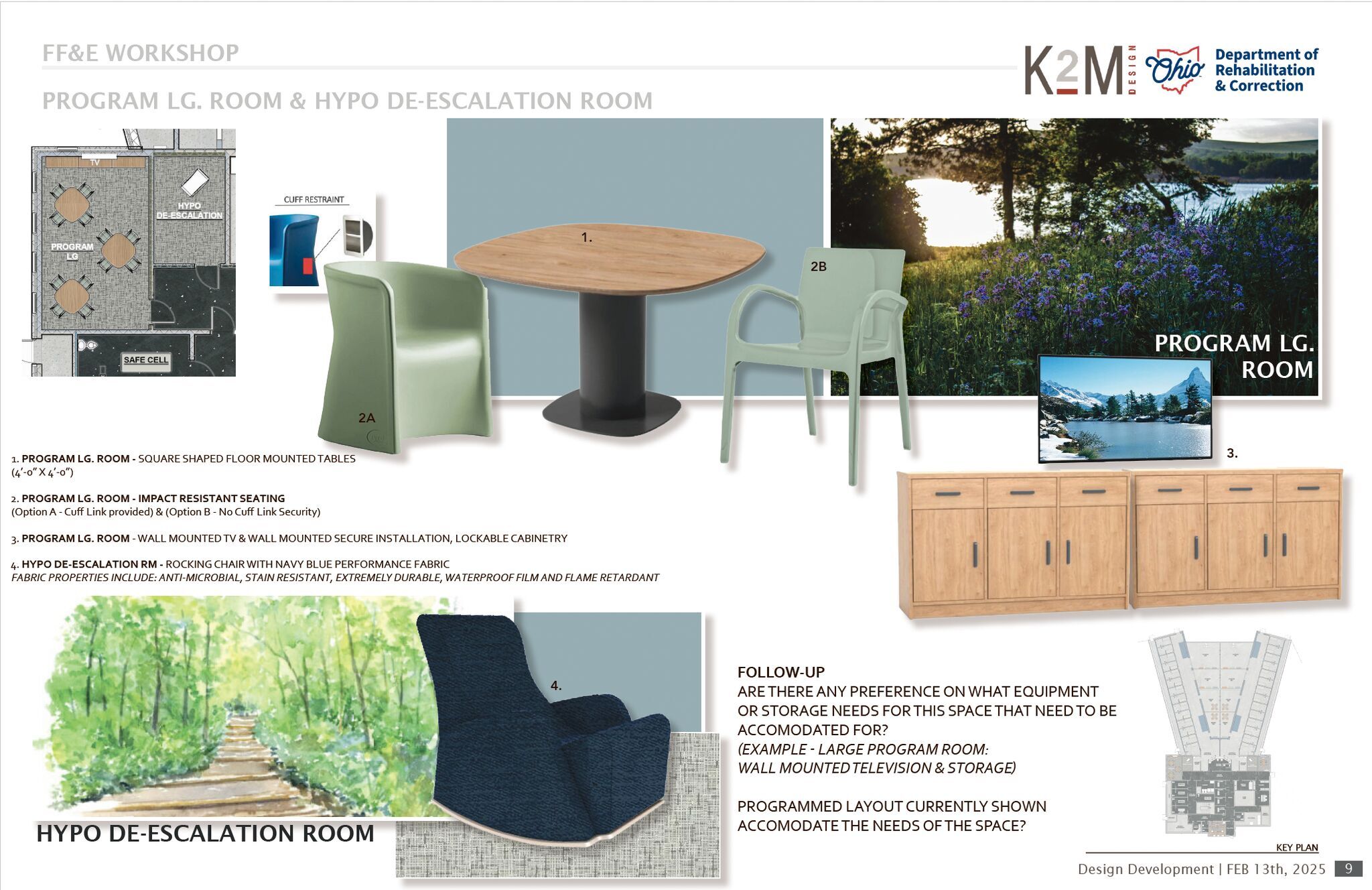
    • Hyper- and hypo-de-escalation rooms as spaces for prevention and stabilization
    • Structured programming that maintains order and minimizes risk

    The path forward requires courage and vision. Leaders must reject the false choice between security and humanity. In practice, the two reinforce each other: secure environments emerge when facilities are designed to minimize escalation, and staff can maintain order most effectively when spaces are intentionally planned for control and stability.

    Introduction: The Turning Point

    Across the U.S., correctional systems are under strain. Overcrowding, staff shortages, rising operational costs, and persistent violence challenge communities and budgets alike. At the same time, public expectations are shifting. Communities demand accountability and safety above all else, alongside systems that reduce volatility and prevent further harm.

    Traditional designs, rooted in punitive philosophies, were often blunt tools: rows of cells, harsh lighting, constant noise, and limited daylight may maintain order but rarely reduce tension. Residents often leave more destabilized than they entered. Staff, too, pay the price in stress, burnout, and turnover.

    Design can help break this cycle. The environment shapes sensory perception, behavior, and emotional regulation. It can escalate conflict or diffuse it. Around the world, forward-thinking jurisdictions are proving that safety and humanity are not opposites but allies.

    Our work across corrections, justice, and public safety confirms what is possible. We have seen the power of natural light to calm a unit, the difference acoustics make, and the way a thoughtfully designed de-escalation room can reduce outbreaks.  This paper presents six strategies for restrictive housing environments that are secure, stable, and more effective in managing the highest-risk population.

    Safety and Accountability as the Foundation

    Restrictive housing houses individuals who have committed serious and violent infractions inside a jail or prison. These are the most dangerous offenders, placed in restrictive housing as a disciplinary measure and to protect staff and other incarcerated individuals.

    Reducing incidents is often framed as a matter of policy or staffing. But the physical environment plays a critical role. Accountability and control are reinforced through design decisions that limit escalation while preserving order.

    Design strategies that strengthen safety and accountability include:

    • Daylight and views: Access to natural light reduces agitation and aggression.
    • Privacy and normalcy: Thoughtful sightlines and spatial variety improve staff visibility and reduce blind spots.
    • Materiality: Finishes that balance durability with warmth support operational longevity while resisting damage.
    • Spaces for controlled interaction: Securely designed areas allow structured programming or mental health interventions without compromising safety.

    Restrictive Housing environments rooted in security and accountability are not “soft.” They are effective. Research is clear: when facilities reinforce order through design, incidents decline and staff safety improves.

    Acoustics: The Overlooked Power

    Sound is often invisible in design conversations, yet in restrictive housing it is one of the most powerful stressors. Reverberating corridors, slamming doors, mechanical noise, and shouted communication create tension. In a unit already defined by punishment, unmanaged noise amplifies agitation, fuels conflict and increases fatigue.

    In restrictive housing, where stability and control are essential, acoustics directly affect safety and outcomes. A calmer sound environment helps regulate emotions, reduces hypervigilance, and lowers the risk of escalation. For staff, quieter units support clearer communication and reduce stress over long shifts.

    Design strategies include:

    • Acoustic treatments: Wall panels, ceiling baffles, and flooring materials that absorb sound.
    • Spatial planning: Designing dayrooms and corridors to minimize echo and harsh reverberation.
    • Noise zoning: Locating louder functions (HVAC, doors, mechanicals) away from sleeping and program spaces.

    The benefits extend beyond comfort. Reduced noise improves behavior management, lowers incidents, and creates conditions where staff can work more safely and effectively.


    Biophilic Design: Stabilizing the Most Volatile Environments

    Biophilic design, the integration of natural elements into built environments, is not about aesthetics. It is about physiology, stability, and operational control. Exposure to daylight, greenery, and natural materials lowers cortisol, reduces aggression, and restores focus. In restrictive housing, where the most violent offenders may spend long hours in separation, these benefits are critical for reducing volatility.

    Even small interventions matter. A narrow window with a view of a tree can de-escalate agitation. Textures that soften sterile surfaces humanize a space without compromising security. Natural light cycles help restore circadian rhythms disrupted by constant artificial lighting. For individuals in restrictive housing, these sensory cues aid in stabilizing behavior and reducing escalation.

    Effective strategies include:

    • Daylighting: Clerestory windows, skylights, or glazed openings that safely introduce natural light.
    • Nature analogues: Durable finishes and patterns that mimic natural textures.
    • Outdoor connections: Secure courtyards or small garden enclosures visible from dayrooms or accessible under strict supervision.

    These are not luxuries, they are operational investments. Correctional facilities that embrace nature maintain safer conditions for all.

    The Role of Color in Restrictive Housing

    Restrictive housing units are often stark: rows of gray walls under fluorescent lights. This environment disorients, dehumanizes, and heightens stress. Color, applied with intention, is a powerful corrective.

    Psychology and neuroscience confirm that color influences perception and emotion:

    • Cool tones: blues and greens calm and restore.
    • Neutral palettes: reduce visual noise and create comfort.
    • Warm accents: provide orientation and reduce monotony.

    Beyond mood, color reduces disorientation and helps staff manage environments more effectively. Thoughtful palettes mitigate the psychological strain of isolation and support stability.

    Color cannot erase the challenges of restrictive housing, but it reduces unnecessary agitation and helps staff maintain control over volatile populations.

    Hyper- and Hypo-De-Escalation Rooms

    Traditional restrictive housing emphasizes control through isolation. Yet research shows isolation alone can worsen mental health and increase aggression. De-escalation rooms represent a different philosophy: prevention and stabilization within a highly controlled, punitive setting.

    • Hyper de-escalation rooms introduce calming sensory input: dimmable lighting, sound control, calming imagery, and safe furniture. These allow individuals to self-regulate before behavior escalates further.
    • Hypo de-escalation rooms provide the opposite: low-stimulation refuge. By reducing environmental triggers, they help individuals overwhelmed by sensory overload regain composure.

    Design considerations include:

    • Durable but calming finishes
    • Flexible lighting systems
    • Ventilation that supports comfort
    • Secure but non-threatening furniture arrangements

    The benefits are measurable: fewer uses of force, reduced staff injury, lower reliance on restraints, and improved operational outcomes. Borrowed from behavioral health, these spaces reflect a shift from pure isolation to controlled stabilization, always within a framework of punishment and accountability.

    Structured Programming: Maintaining Order in Restrictive Housing

    Structured programming reframes restrictive housing not as leniency but as a tool for reducing escalation, maintaining order, and preventing further harm. By embedding tightly controlled, trauma-aware principles into daily activities, these units can support stability while ensuring accountability.

    Core Principles Applied to Programming in Restrictive Housing

    • Safety: Programming is delivered in ways that reduce escalation risk such as predictable schedules, secure small-group settings, and staff trained in trauma-awareness.
    • Choice: Even in restrictive conditions, residents can be offered limited options that promote responsibility.
    • Collaboration: Step-down group programming for 2–6 residents encourages pro-social behavior in a tightly controlled setting.
    • Trustworthiness: Consistency matters: reliable access to structured activities reinforces predictability and stability.

    In Practice, Structured Programming May Include

    • In-Cell Engagement: Self-paced learning packets, secure tablet courses, reflection journals.
    • Out-of-Cell Program Rooms: Small therapy, education, or skill-building sessions in secure, acoustically treated spaces.
    • Step-Down Activities: Controlled dayroom use for group discussion, art, or physical activity that aids stabilization.
    • Therapeutic Interventions: Regular mental health check-ins and coping-skills workshops to reduce volatility.
    • Skill-Based Progression: Tasks that foster accountability, such as peer tutoring or structured chores.

    Outcomes of Well-Programmed Restrictive Housing

    • Residents maintain more stable routines, reducing volatility.
    • Staff report fewer incidents, greater trust, and improved morale.
    • Units function as secure, stable environments rather than purely isolating ones.

    Conclusion

    Correctional facilities are more than places of incarceration. They are places where staff are tested, where dangerous behavior must be controlled, and where communities are impacted. Design cannot solve every challenge, but it sets the stage for what is possible.

    The correctional environments of the future will not be defined solely by efficiency or security, but by their ability to reinforce safety, minimize incidents, and protect staff while maintaining stability for the highest-risk populations. When we design with intention—embedding accountability, managing acoustics, and using light and color with purpose—we create environments that allow staff to operate effectively and securely.

    At the core is biophilia: the principle that people are wired to find calm in connection with nature. In restrictive housing, this foundation supports stabilization, controlled programming, and safer engagement. The result is secure facilities today and stronger communities tomorrow.